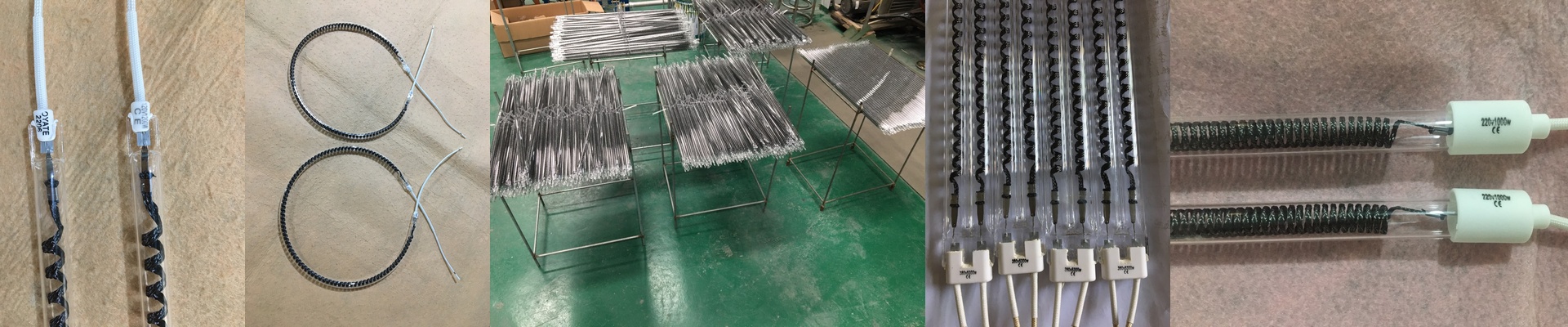
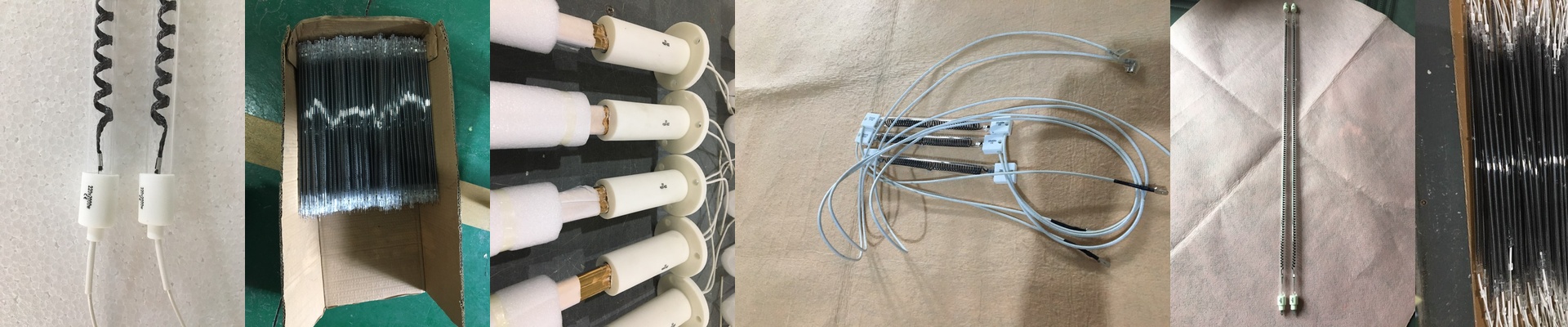
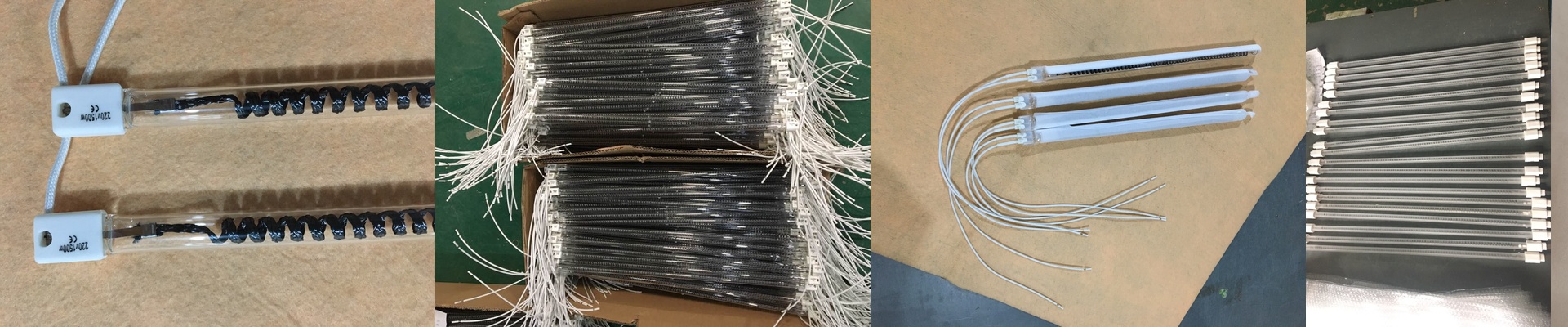
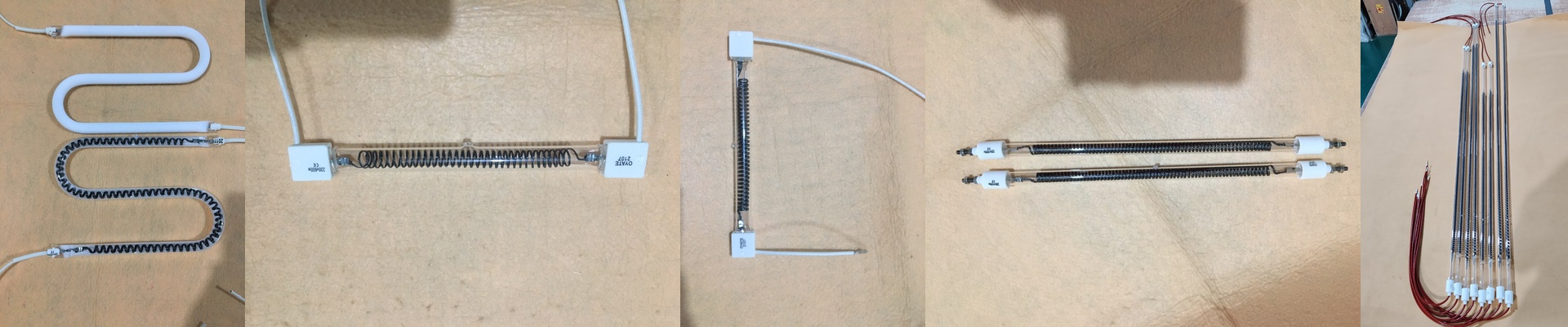
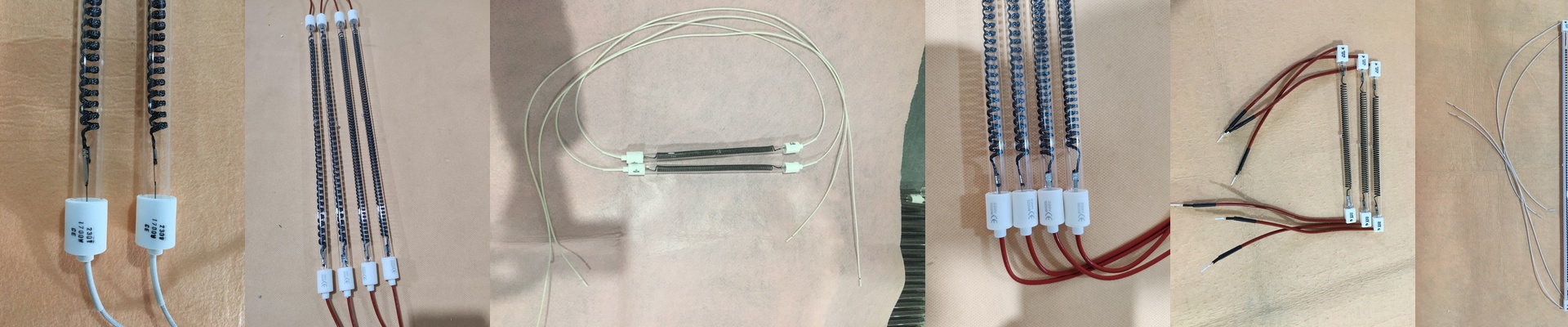
Let’s talk specs: Power, voltage, and size.
We built this infrared carbon heat lamp for the places that need serious heat—fast—but don’t have room to waste. The heart of it runs on 400V and 2500W, packed into a 300mm tube. That’s a lot of heat in a small space. And it shows. It hits operating temperature quickly, so warm-up time drops and your machine can keep a steady, fast pace. The 400V rating is also a practical win. It lines up with standard industrial power, so you don’t have to hunt down extra transformers.
The build: Halogen, quartz, and the right connectors.
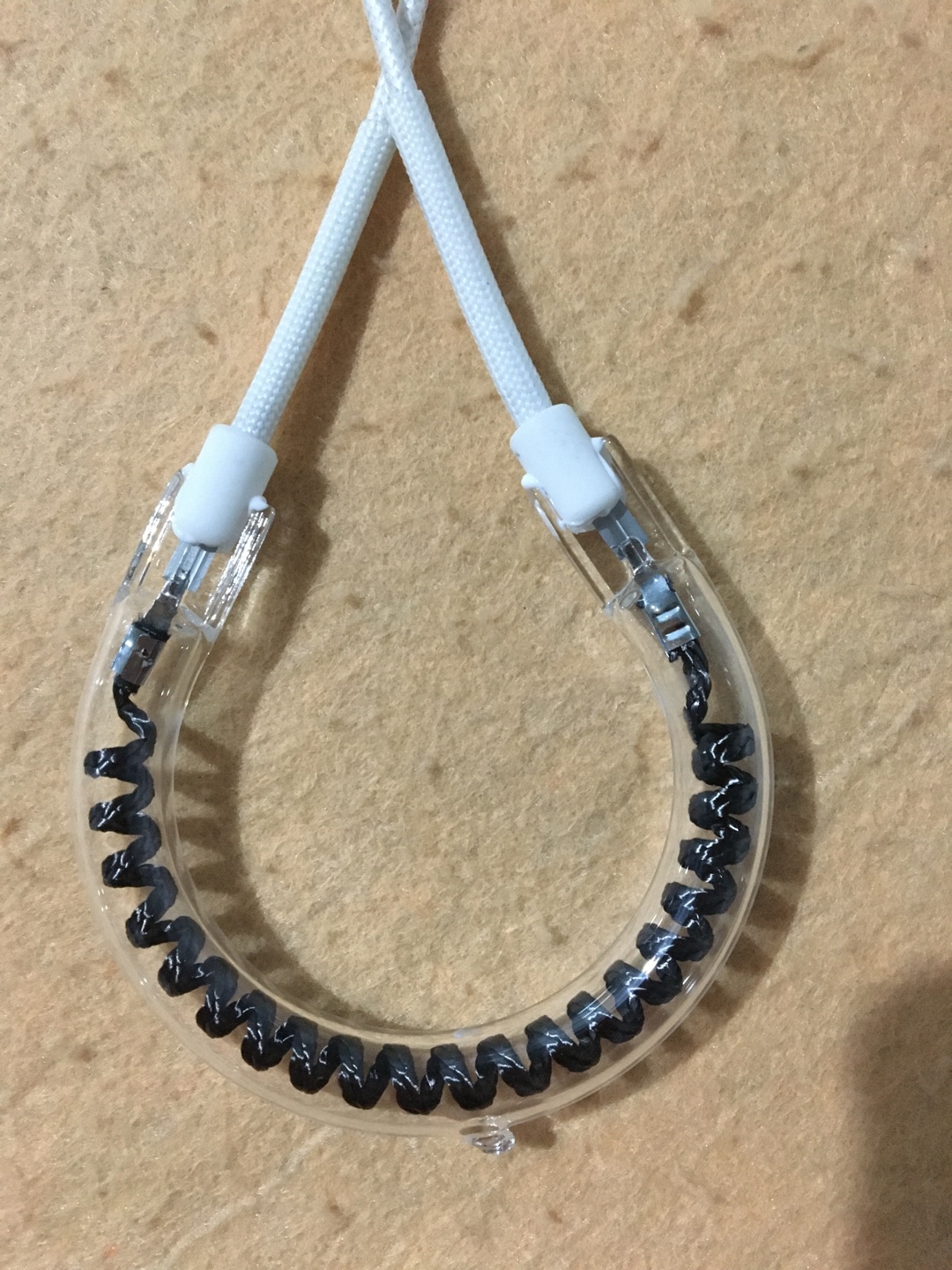
We went with a halogen-filled quartz tube. The halogen cycle helps keep the element clean, so the lamp stays bright and consistent over its life. It’s also tough enough to handle rapid on/off cycling without giving out early. Then there’s the R7s connector—double-ended pins that are a proven, standard fit. That means it drops straight into existing fixtures. No messing with mounting hardware. Just wire it in and go.
Where it shines—and what to watch for.
This setup is made for jobs like PET bottle blowing, where you need focused, fast heating on the preforms. The shortwave infrared gets in fast and heats from the inside out, not just scorching the surface. You get tighter control over the heating profile, which matters when the process has to be precise. But here’s the thing: packing 2500W into a 300mm tube creates serious heat in one spot. So your cooling system has to be up to the job. If the electronics around the lamp can’t handle the temperature rise, you’ll shorten their life. Plan your thermal management from the start—because heat is powerful, and it needs a plan.